The Loft You Don't Build: Why Boarding Beats Converting in Some Bristol Terraces
The pitch, and why I've stopped nodding along
Every few weeks someone says the same thing to me, usually over a coffee somewhere off the Gloucester Road. They've had a builder round. He's told them they can get a bedroom and a shower room up in the roof for "about fifty grand". Then they ask whether it's worth it.
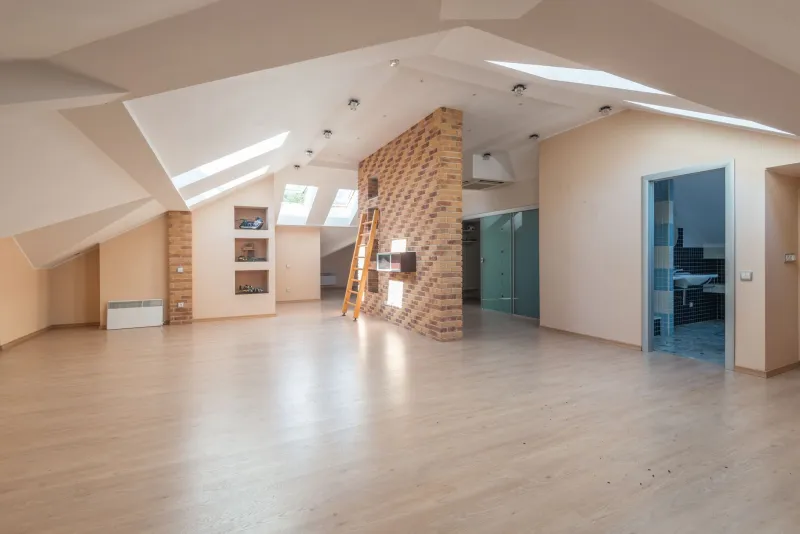
And the honest answer, more often than I'd like, is no. Not because lofts are a bad idea — they're one of the few ways to add genuine floor area to a Victorian terrace without eating the garden. But because the loft is the most expensive square metre most Bristol homeowners will ever buy, and the terrace stock doesn't always play ball.
The numbers that don't make the quote
Start with the headline. A straightforward rear dormer on a Bristol mid-terrace, one room, no ensuite, is landing somewhere between £48,000 and £62,000 in 2026 once you've paid for drawings, a structural engineer, Building Control and a contingency that isn't imaginary. Add a shower room and you can put another £10,000–£14,000 on top, plus the drainage — and the soil stack is never where you want it.
Then come the costs that live outside the quote. The Party Wall Award, a grand to twenty-five hundred depending on how agreeable next door is. The fire doors you'll now need across the house. The ventilation upgrade. The fact that a new stair has to land somewhere, and in a typical two-up-two-down that somewhere is the second bedroom you were counting on.
Call it £60,000 all in for a bedroom and an ensuite. On a two-bed terrace in Bedminster or St George sitting around £390,000, that's more than 15% of the value of the house, spent in one hit.
What it actually adds
Local agents tend to say a loft room adds 10–15%. That's roughly right as an average, and averages flatter the small jobs. The uplift on a third bedroom with a 2.2m ceiling, one Velux and no ensuite is nearer 8–10% — so roughly £32,000 to £40,000 on that £390,000 house.
You can see the problem from there. Sixty out, forty in, and four months living in a building site with a tarpaulin on the roof.
Where the arithmetic flips is when a house is genuinely short of bedrooms relative to what buyers want. In parts of Ashley Down, Horfield and Bishopston, a proper three-bed with an ensuite is a different product to a two-bed, and the premium is real and durable. That's the case for converting. But if your street is already wall-to-wall three-beds, or your house is a three-bed and buyers are chasing parking and a garden instead, the loft is solving a problem nobody had.
The half-way loft
Here's the bit that gets skipped in every conversation about dormers.
A boarded loft with a decent ladder, a light, a couple of sockets and an insulated hatch costs £3,500–£8,000. A Bristol terrace typically gives you 25–35 square metres of footprint at joist level, of which maybe 15–20 is comfortably walkable once you've kept clear of the eaves and the water tank.
That isn't glamorous. It is, however, transformative in a quieter way. The suitcases, the decorations, the tools, the boxes of school artwork, the archive of your life — all of it leaves the spare bedroom and the cupboard under the stairs. The second bedroom becomes a bedroom again rather than a storage unit with a bed in it. Which is, honestly, half of what people are chasing when they first ring a builder.
Do it properly and it's still cheap. Raise the boarding on battens so you don't compress the mineral wool. Keep the eaves ventilation path clear. Get a structural engineer to glance at the ceiling joists before you load them (£400–£700, and cheap insurance). Fit a proper insulated hatch rather than the flimsy panel from 1987. Put in a light you can actually see by.
One clarification, because it comes up constantly: a storage loft isn't a habitable room and doesn't need the full Building Regs treatment. The moment you install a fixed staircase and start calling it a bedroom, everything changes — fire separation, escape, ventilation, the lot.
Three tests before you pay for drawings
One: ridge height. Measure from the top of the ceiling joists to the underside of the ridge. You want roughly 2.6m to end up with a comfortable 2.2m finished ceiling once the floor build-up and roof build-up are in, unless you're going to a dormer or altering the roofline. Plenty of Bristol terraces sit at 2.4–2.6m, which is marginal and worth knowing before anyone draws anything.
Two: where the stair lands. Sketch it. Not the room — the stair. If it wipes out the second bedroom, or forces you to lose the airing cupboard and half the landing, deduct that from your uplift before you go any further. A lot of lofts that look like a gain on paper are a swap in practice.
Three: exit maths. How many bedrooms do buyers on your road actually pay a premium for? Look at what's sold within a quarter mile in the last eighteen months. If four-beds aren't clearing three-beds by much, you're building for yourself. That's a perfectly good reason — just don't dress it up as an investment.
Fail two out of three and stop. Put the kettle on and get a quote for boarding instead.
Who should absolutely convert
Two-bed terraces where a third bedroom genuinely changes what the house is and who it sells to. Houses where the stair can run over the existing flight or tuck into the landing without collateral damage. Roads where a dormer is already established and nobody at the council is going to raise an eyebrow. Anything where an ensuite can be squeezed in without shrinking the bedroom to a cupboard.
If that's you, do it once, do it properly, and don't leave the ensuite "for later" — it never happens, and a loft bedroom with no bathroom on that floor is the compromise buyers notice first.
Everyone else? Board it, light it, insulate the hatch, and put the other £52,000 into the kitchen, the garden and the roof — which, on a Bristol terrace of a certain age, almost certainly needs doing anyway.