Why Your Bristol Loft Starts Next Door: The Party Wall Reality Check

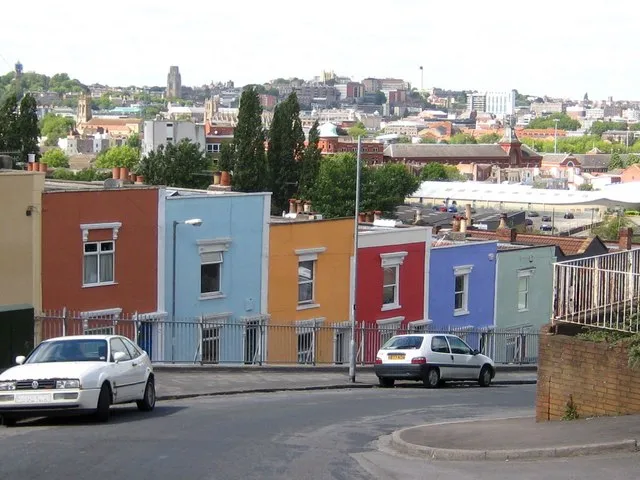
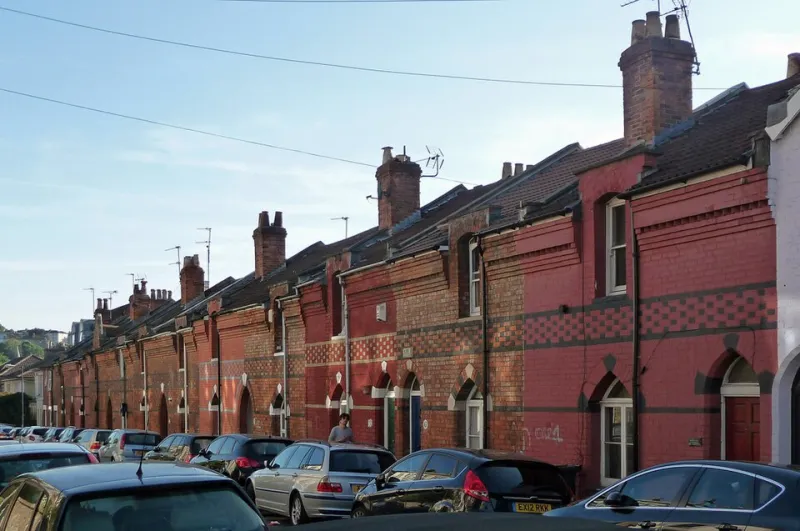
Photo: Rod Allday , CC BY-SA 2.0, via Wikimedia Commons
It usually starts with a beam pocket
A Bristol loft conversion rarely announces itself politely. One morning there’s a skip on the road, the next there’s a hole in a party wall sized for a steel beam. For homeowners in terraces from Easton to Bedminster, that hole is often the moment the Party Wall etc. Act 1996 stops being a line in the quote and becomes a live project risk.
The act is not there to kill loft schemes. It is there to stop one owner’s structural ambition landing on a neighbour’s ceiling without warning. In a city where so many homes share a wall, that matters. It also means the paperwork can decide whether your first beam arrives on schedule or sits on a lorry while solicitors and surveyors catch up.
When the 1996 Act actually bites
Not every loft conversion triggers the act. A detached house with no boundary works may never need a party wall notice. A mid-terrace loft usually will, because the structural solution tends to involve one or more of the following:
- cutting into a party wall to form beam pockets or bearings;
- inserting steel beams into the party wall;
- raising, thickening or rebuilding a party wall;
- excavating near a neighbour’s foundations, for example for a new rear extension or pad foundations tied into the loft scheme;
- building a new wall along the line of junction.
For loft conversions, the first two are the common ones. The act also covers excavation within three metres of a neighbour’s foundations, and within six metres in some cases where deeper foundations are proposed. In a Bristol terrace, even a modest rear extension can pull the loft project into that territory.
If the work is purely within your own roof space and does not touch the party wall, you may not need a notice. That is a question for your structural engineer and party wall surveyor, not a guess based on a builder’s reassurance.
Notices: less ‘formality’, more calendar control
A party wall notice is not a courtesy note through the letterbox a week before work. The act sets minimum notice periods. For works to an existing party structure, the usual notice period is two months before the work starts. For excavation, it is one month. If you are building a new wall at the line of junction, the notice period can be longer.
In practice, the notice should identify the owners, the address, the proposed works and the relevant section of the act. It should be dated and delivered properly. A neighbour can consent in writing, dissent and appoint their own surveyor, or do nothing. Doing nothing is not a veto, but it does not make the process disappear either.
This is where Bristol terraces get interesting. One loft may need notices to two adjoining owners. If either neighbour is a landlord, absent, or simply suspicious of builders, the calendar can stretch. Starting the notice process after the scaffold is booked is the classic own goal.
What an award does — and doesn’t — settle
If neighbours consent, the parties can proceed on those terms. If they dissent, or fail to respond, the act usually brings in surveyors to agree an award. Each side can appoint a surveyor, or both can agree on a single agreed surveyor.
The award is not a planning permission and it is not a building regulations approval. It is a document that records what can be done to the party wall, how it will be done, what temporary access is allowed, who pays whose fees, and how damage is made good. It can cover working hours, protection for neighbours’ finishes, and the schedule for inspections.
It does not give you the right to ignore planning or conservation rules. It does not settle boundary ownership arguments. And it does not magically make a neighbour happy. It simply creates a lawful process for works that affect shared structure.
The neighbour-relations bit no one budgets for
Most party wall disputes in Bristol are not about engineering. They are about trust. A neighbour who has lived through three loft conversions on the same terrace may already be wary. A neighbour who works nights will care about drilling times. A neighbour who has just redecorated will care about cracks in the hallway ceiling, even hairline ones.
The practical answer is boring and effective: talk early, share the drawings, explain the sequence and put the surveyor’s details in writing. Do not let the first conversation be a notice envelope. If the neighbour wants to appoint their own surveyor, factor that in rather than treating it as hostility. In a mid-terrace conversion, a calm party wall process is often cheaper than a delayed one.
What it costs and how long it takes in 2026
Costs vary with the number of adjoining owners and the complexity of the award. For a straightforward domestic loft in a Bristol terrace, budget roughly £900 to £2,000 per adjoining owner for the neighbour’s surveyor fees, plus your own surveyor’s fee. A two-neighbour terrace can easily land between £2,500 and £4,500 before any making-good work. If the scheme involves basements, deep excavations or already-damaged walls, the figure can rise.
Timing is the bigger issue. Consent can arrive in days. A full award usually takes six to twelve weeks from notice, sometimes longer if surveyors are busy or access is awkward. That is why the notice stage should run alongside the planning and building regulations work, not after it.
A pre-start checklist for Bristol lofts
Before the first steel beam is ordered, check the following:
- Has the structural engineer confirmed whether the loft touches the party wall?
- Has the party wall surveyor reviewed the drawings and identified every adjoining owner?
- Have notices been served with the correct notice period, not the builder’s best guess?
- Is there a written record of access, working hours and protection for neighbours’ property?
- Has the award, or written consent, been received before the scaffold goes up?
- Are building regulations and planning conditions discharged, not just submitted?
- Has the neighbour got a named contact for the build, not a site phone that goes unanswered?
The party wall process is rarely the glamorous part of a loft conversion. It is, however, one of the few parts that can stop the job before it starts. In a city of shared walls, treating it as a pre-start essential rather than an afterthought is not bureaucracy. It is how a Bristol loft gets built without turning next door into an enemy.