Where Bristol Lofts Pay Best in 2026: Five Neighbourhoods Ranked by Real-World Uplift
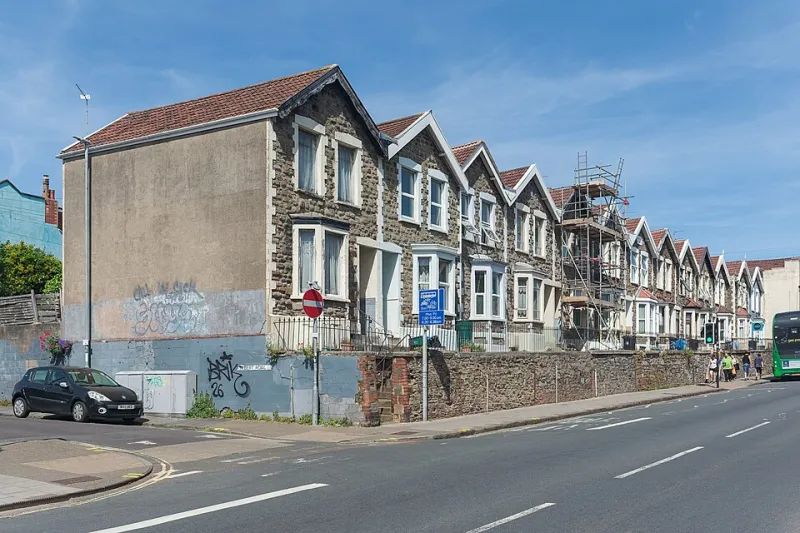
Photo: Stephen Richards , CC BY-SA 2.0, via Wikimedia Commons
Loft conversions are not a one-size-fits-all Bristol upgrade. The same dormer that turns a Redland villa into a six-figure uplift can look overdone on a small Easton terrace—and the numbers move accordingly. For 2026, we asked local agents, builders and planning consultants which neighbourhoods are still making lofts stack up. The ranking below blends recent sold-price evidence, typical build costs and the practical constraints that decide whether a project is straightforward or a headache.
A caveat before the list: these are working ranges, not guarantees. Bristol's postcodes are patchy, and two houses on the same street can produce different appraisals. Use the figures as a sanity check, then get a local valuer and a builder to look at your actual roof.
How we ranked the hotspots
We looked at four things: the gap between a two-bed and three-bed asking price in each area; how often lofts are already common, which is a sign buyers accept them; planning friction; and all-in build costs. The 'uplift' is the likely increase in resale value after a well-designed loft, not profit. Subtract build costs, fees and contingency to get the real return.
1. Redland: premium uplift, premium scrutiny
Redland tops the list because the value gap between a family house with extra upstairs space and one without is still wide. Our 2026 working range is £95,000 to £130,000 for a well-executed loft on a typical Victorian villa, against build costs of roughly £55,000 to £75,000 for a dormer or hip-to-gable scheme.
Local agents say buyers here are less price-sensitive than in other Bristol hotspots, but they are fussy. A clumsy box dormer can hurt a sale. Redland has conservation areas and a patchwork of permitted development limits, so check before assuming you can build. Pre-application advice from Bristol City Council is money well spent, and a planning consultant who knows the local design codes is worth more than the cheapest quote.
Best ROI tip: keep the staircase over the existing stairwell, use the roof space efficiently and add a shower room only if it does not cannibalise bedroom space.
2. Bishopston: the family-terrace sweet spot
Bishopston remains the textbook Bristol loft area: Victorian and Edwardian terraces, strong school demand and buyers who will pay for a fourth bedroom. We are seeing a typical uplift of £70,000 to £95,000, with build costs around £45,000 to £65,000 depending on whether you choose a Velux-only conversion or a rear dormer.
The planning story is usually manageable under permitted development, but not always. Some streets are in conservation areas, and rear dormers still need to respect the 45-degree rule and the 200mm set-back from the eaves. Agents we spoke to said a tidy dormer with matching brick and slate outperforms a cheap white-render box every time.
Best ROI tip: if the loft is for a family bathroom plus a bedroom, price the bathroom carefully. Over-specifying a small en-suite can wipe out the extra value.
3. Southville: strong demand, tighter plots
Southville's terraces are popular with buyers who want North Street on the doorstep, and the loft premium remains healthy at roughly £65,000 to £90,000. Build costs are similar to Bishopston—£45,000 to £60,000 for a straightforward rear dormer—but access and party wall issues can add thousands.
This is an area where a loft often beats moving. A three-bed terrace with a loft bedroom and shower room can compete with much pricier four-beds nearby. Local agents warn against turning a two-bed into a three-bed if the ground floor is cramped; buyers here still want a usable living room and a kitchen that opens to the garden.
Planning trends: more homeowners are using Velux roof lights and small rear dormers rather than full-width boxes. That tends to sail through more easily and looks better from the street.
Best ROI tip: sort the party wall agreement early. A neighbour dispute can stall a Southville loft faster than any planning issue.
4. St Andrews and Ashley Down: the quiet achiever
St Andrews and Ashley Down have larger Victorian houses and a growing family market. We put the 2026 uplift at £60,000 to £85,000, with build costs of £50,000 to £70,000 for a dormer conversion. The returns are slightly lower than Redland, but the starting prices are lower too, so the percentage gain can be similar.
The housing stock often has generous roof pitches, which makes a clean loft conversion easier. Some roads have conservation area status, so roof lights and dormer design need care. Agents say buyers here value storage and a proper landing; a loft that feels like a converted attic rather than a real floor is harder to sell.
Best ROI tip: invest in insulation and a good staircase. Buyers notice a cold loft and a tight turn at the top.
5. Easton and Greenbank: value-led, cost-sensitive
Easton and Greenbank make the list because demand is strong and the price gap between two- and three-bed terraces is still meaningful. Our working uplift is £50,000 to £75,000, with build costs of £40,000 to £60,000. The margin is thinner, so the project has to be efficient.
This is not the area for a gold-plated loft. A simple rear dormer, Velux windows and a compact shower room usually make more sense than a complicated mansard. Planning is generally less restrictive than in Redland, but check for conservation areas and Article 4 directions.
Best ROI tip: keep the specification mid-market. Buyers in this bracket will pay for space and a decent finish, not a wine fridge in the eaves.
The 2026 takeaway
The Bristol lofts that pay best in 2026 are not always the biggest or the flashiest. They are the ones that add a genuine bedroom and bathroom without wrecking the roof line, the staircase or the ground-floor layout. Redland and Bishopston lead on raw uplift; Southville and St Andrews offer a better balance of cost and demand; Easton rewards discipline.
Before you commit, get three local valuations—one from an agent who sells lofts, one from a builder who builds them, and one from a surveyor who will tell you the awkward truth about your roof.